Uterine Fibroid Embolization (UFE)
Department: Gynecology
A minimally invasive procedure used to shrink uterine fibroids by blocking their blood supply using tiny embolic particles.
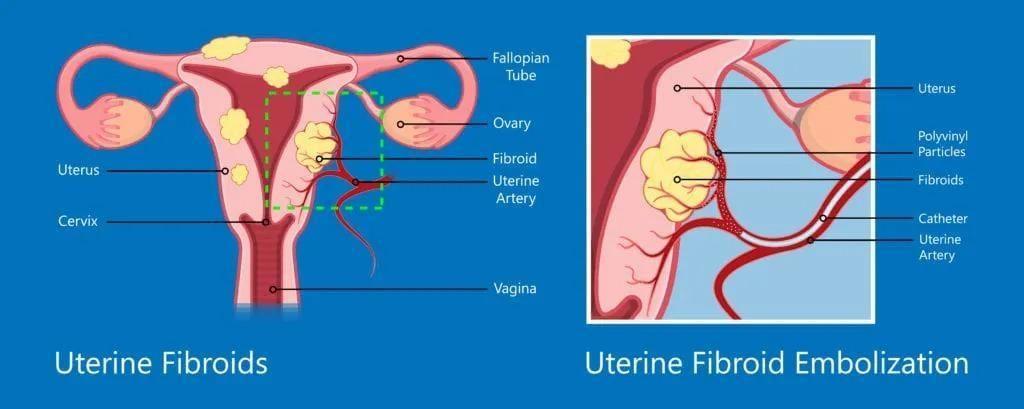
Detailed Overview
Uterine Fibroid Embolization (UFE), also known as uterine artery embolization, involves inserting a catheter through a small incision in the groin or wrist. Under imaging guidance, tiny particles are injected into the arteries supplying the fibroids, blocking blood flow and causing the fibroids to shrink. This procedure preserves the uterus and is an effective alternative to surgery.
Benefits
Minimally invasive alternative to hysterectomy or myomectomy Preserves the uterus Short hospital stay and recovery time Effective in reducing fibroid symptoms
Preparation
Fasting for 6–8 hours before the procedure Pre-procedure imaging (like ultrasound or MRI) to evaluate fibroids Discuss current medications with your doctor
Recovery
Hospital stay of 6–24 hours depending on patient response Mild pain or cramping for a few days Return to normal activities in 7–10 days
Duration
Approximately 60–90 minutes
Anesthesia
Local anesthesia at the insertion site. Conscious sedation or light anesthesia for comfort
Indications
- Symptomatic uterine fibroids (heavy bleeding, pelvic pain, pressure)
- Patients seeking non-surgical treatment
- Women who wish to preserve the uterus
Risks
- Post-embolization syndrome (pain, fever, fatigue)
- Infection (rare)
- Premature menopause (rare in women over 45)
- Possibility of fibroid recurrence
FAQs
Q: Is UFE a surgery?
A: No, it's a minimally invasive, image-guided procedure done through a small puncture.
Q: Will I still get my periods after UFE?
A: Most women continue to have normal periods, though flow may be lighter.
Q: Can I get pregnant after UFE?
A: Pregnancy is possible, but it depends on individual factors. UFE is not recommended if pregnancy is a top priority.