Alcohol Ablation For Ovarian Cysts
Department: Gynecology
Detailed Overview
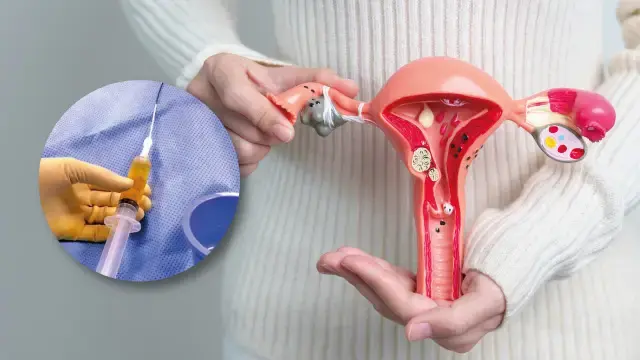
What it is Alcohol ablation for ovarian cysts ? Alcohol ablation for ovarian cysts involves inserting a needle (often under ultrasound guidance) into the cyst, draining its fluid, then injecting sterile ethanol (alcohol) into the cavity so that the cyst walls are exposed to the alcohol, which causes damage to the cyst lining and fibrosis, causing the cyst to shrink or resolve.
Benefits
Minimally invasive alternative to surgical removal of ovarian cysts (e.g., laparoscopy). Potential to preserve ovarian tissue (important for fertility) since the cyst is treated without removing the entire ovary in selected cases. Shorter recovery time compared to open or more invasive surgery. Lower recurrence rates compared to simple aspiration (in selected patients). For example: in one report 8.2% relapse after alcohol ablation in 366 patients with selected cysts.
Preparation
Imaging (ultrasound, and sometimes MRI) to evaluate the cyst: size, unilocular vs multilocular, wall character, absence of suspicious features (e.g., thick septa, neovascularization). For example, cysts suitable for this technique were described as unilocular, sonolucent, smooth wall, no septa, no Doppler neovascularization. Blood testing, including tumor markers (for example, CA‑125) to help rule out malignancy in appropriate cases. In one series cysts with CA‑125 < 35 U/mL were included. Fasting or standard preparation for ultrasound‐guided/ radiologic procedure depending on institutional protocol.
Recovery
Many procedures can be done on an outpatient basis or with a short observation period. For example, one center allowed same‑day discharge after 2 hours of observation. Mild pain or discomfort in the pelvic area are common; occasionally analgesics are needed. In one large series 3.3% of patients had intensive pelvic pain requiring IV analgesics. Activity may often return to near normal within 1‑2 days, depending on institutional practice and patient’s condition. Follow‑up imaging (usually ultrasound) at 3, 6, 12 months (or as directed) to assess cyst size, recurrence. For example: follow‐up at 3, 6 and 12 months in one series.
Duration
The actual procedure (drainage + injection) may take roughly 20‑45 minutes in many cases. For instance, in one series mean operative duration was 22 min (range 8‑45 min) for transvaginal ultrasound‑guided ethanol sclerotherapy. Total time including prep and recovery may be somewhat longer depending on the facility.
Anesthesia
Local anesthesia at the puncture site is common (especially for transvaginal ultrasound‑guided approaches) plus sometimes light sedation/spinal anesthesia depending on operator and patient. In one study transvaginal ethanol sclerotherapy was done under spinal anaesthesia.Because the approach is minimally invasive, full general anesthesia is often not required.
Indications
- Symptomatic ovarian cysts in selected cases (e.g., pain, pressure, cyst size) where the cyst is benign appearing, accessible, and patient wishes to avoid surgery or preserve fertility. Specifically for cysts that are unilocular, smooth walled, no suspicious features on imaging. PubMed +1 Patients who wish to preserve ovarian function (fertility‐preserving) and where surgical risk is higher or patient preference is to avoid surgery.
Risks
- Pelvic pain during or after procedure (due to alcohol irritating adjacent tissue) – in one study 3.3% had intensive pelvic pain. Cyst rupture or leakage of alcohol into the peritoneal cavity. In one large series three cysts (0.8%) ruptured. Infection (although rare) as with any invasive procedure. Possible impact on adjacent ovarian tissue (depending on technique) – this is an area where counselling regarding fertility outcomes is needed. For example: some concern around damage to ovarian follicles after ethanol injection in endometriomas. Recurrence of the cyst. For example: in one study relapse in 5.3% after 3 months. Because this procedure is less established for some cyst types, long‐term data are more limited compared to standard surgery.
FAQs
Is this a surgery?
No — it’s a minimally invasive, image‑guided percutaneous or transvaginal needle procedure, rather than a laparoscopic excision.
Will my ovarian function be preserved?
In selected cases yes — one of the advantages is that it may preserve ovarian tissue compared to removing an ovary; however, individual outcomes vary and fertility implications must be discussed with your doctor.
Is this suitable for all ovarian cysts?
No — suitability depends on the cyst’s imaging features and other patient factors. Cysts with suspicious features may still require surgical evaluation. Careful patient selection is crucial.